This is the third post in our dedicated series on community outreach. Read all our posts on community outreach here.
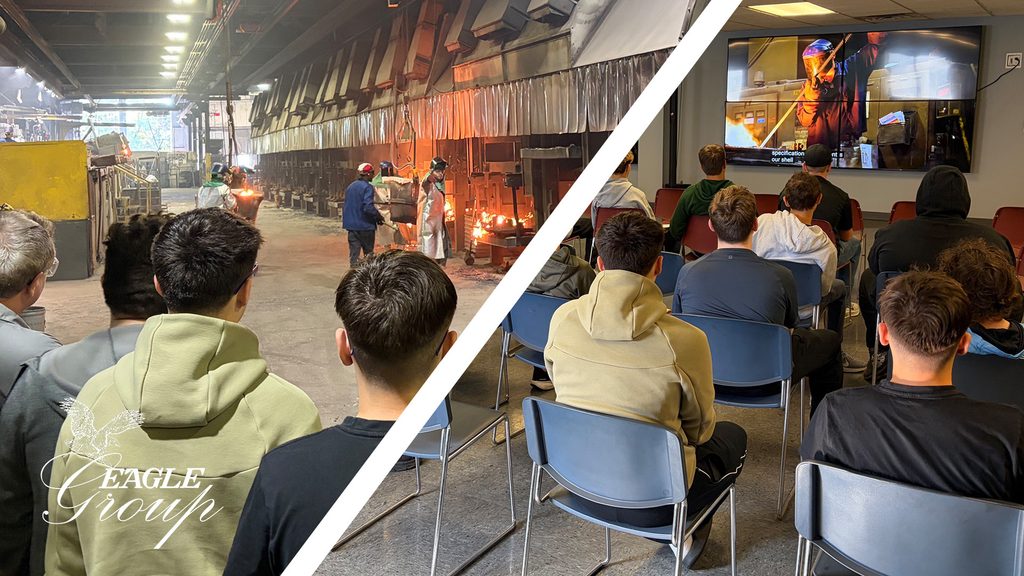
A school bus pulls up outside Eagle Alloy. Students step down, put on protective equipment, then file onto the shop floor. For many, this will be their first look inside a foundry, or any manufacturing facility.
Within an hour, they see skilled teams running advanced equipment, programming machines, building digital models, and solving real production problems to make precision products. Many leave surprised to find that the technology and problem-solving they associate with other careers are also an integral part of manufacturing.
That’s the idea behind Manufacturing Day, an initiative led by the Manufacturing Institute and the National Association of Manufacturers. Held on the first Friday of October, it kicks off National Manufacturing Month, with tours and activities continuing throughout October. In 2025, more than 3,000 Manufacturing Day events reached hundreds of thousands of students, parents, educators, and community members nationwide[i]. For manufacturers of every size and specialty, it’s a chance to welcome the next generation inside and show them where the industry is headed.
For the Eagle Group, participating in Manufacturing Day is part of a broader commitment to community engagement. Across Eagle Alloy, Eagle Precision Cast Parts, and Eagle CNC, we want to show the work behind the products people use every day and highlight the rewarding manufacturing careers for students available close to home.
Why We Open Our Doors on Manufacturing Day
A student cannot weigh a career option they’ve never encountered. Yet manufacturing often remains out of sight, even in communities where it is an important employer. Young people may recognize a company’s name without knowing what it makes, who works there, what kind of jobs people do, or how someone enters the industry.
Manufacturing Day tours help close that gap. Students meet employees, see processes in action, see things being made, and ask questions that a classroom presentation may never prompt. When their curiosity is fresh, the questions come hard and fast and can often lead to exciting on-site discussions that stay with them when the tour is over. Equally, educators gain examples they can bring back to their classrooms, while participating members of the community are given an opportunity to update their own understanding of the industry.
There is a big reason to give those experiences attention. A 2017 study released by the Manufacturing Institute, SkillsUSA, and the Student Research Foundation found that 63 percent of students identified their own interests and experiences as the strongest influence on their career decisions[ii].
In other words, you have to show them before you can interest them. Exposure is the first step on the career ladder.
Making Every Minute Count: A Tour at Eagle Alloy
At the Eagle Group, Manufacturing Day can bring a few hundred students through our doors. Jason Bergman, Quality Manager and Metallurgist at Eagle Alloy, notes that roughly a half dozen schools come through Eagle Alloy each year. And that’s just in one of our three facilities. Our location is one stop in a school day that may include three, four, or five local manufacturers.
Keeping a rigorous schedule requires making choices. We can’t teach students the entire casting process in a short visit, and we don’t want to put them to sleep with a technical lectures. We know we need to give them something concrete to make sure they remember the awe that can be inspired by manufacturing.
“Who here likes cars?” Bergman might ask. “What helps make some of them so fast?” That opens the door to showing students a turbocharger housing and explaining how this cast metal part forces more air into an engine, giving it more power without requiring significantly more mass. Suddenly, the casting in front of them is part of something they already find exciting.
Food supply could offer another way in: “What did you have for dinner last night?” or “What’s your favorite food?” He might then show them a critical component for a harvester, sprayer, or feed housing, and explain to them that thousands of cast parts like these are what keep our agriculture industry running.
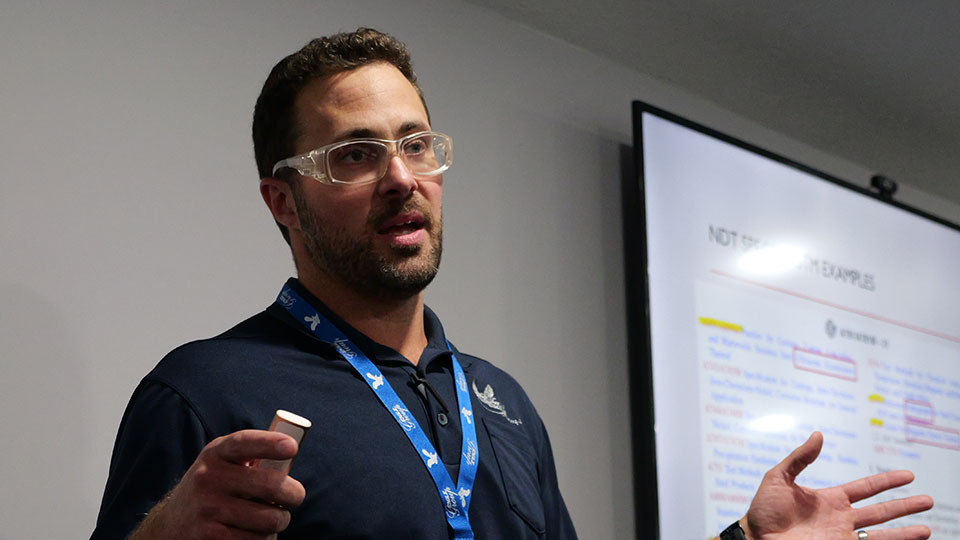
Jason Bergman presenting in Eagle Alloy’s training center
That’s the idea: connect a tangible part produced right here to something they already see, experience, and interact with in their day-to-day lives.
Those connections can follow students back to school. Geometry class might be more exciting when they remember how a part’s shape helps it fit inside a motorcycle, a tank, or a skyscraper. A lesson about metals can bring to mind the strength a tractor component needs to withstand years of heavy-duty work. The instructions in a computer program are easier to appreciate after watching them guide the movements of a 10-foot-tall robotic arm.
The tour gives students something tangible to connect their lessons to—and a reason to wonder what they could make with that knowledge. Making manufacturing careers for students feel more attainable may even give them reason to apply themselves more diligently in school.
Showing Manufacturing Work Honestly
Manufacturing has absolutely changed in recent decades, in ways that make some aspects of modern manufacturing unrecognizable from the past. However, presenting every job as easy, quiet, or spotless would give students an incomplete and even erroneous picture. Foundry work involves heat, noise, physical demands, and processes that require very careful attention and adherence to safety protocols. A successful tour explains those realities alongside the ergonomic improvements being made every day.
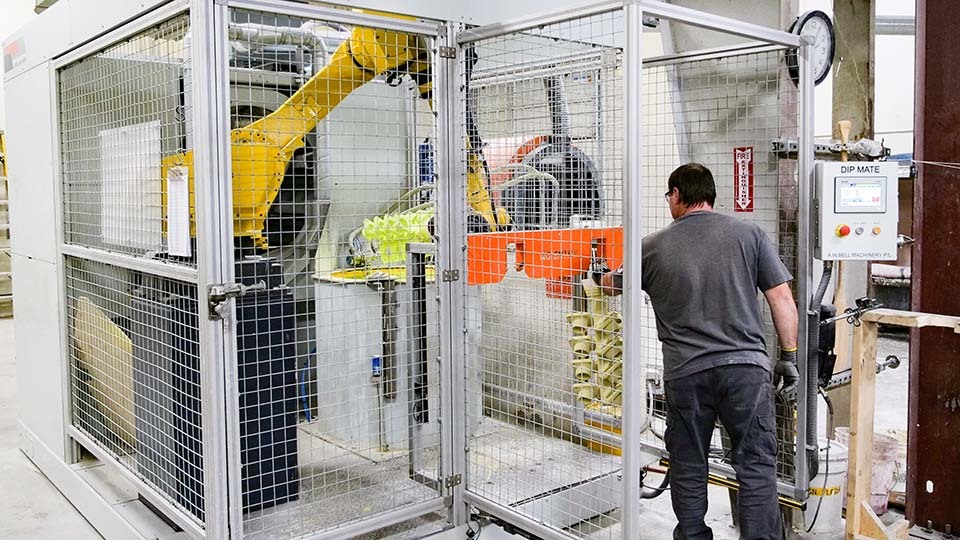
Operator at Eagle Precision feeding the “Dip Mate” robotic dipping cell
Automation provides a clear example. Eagle Alloy uses robotic grinding cells, while Eagle Precision uses robotic equipment in dipping and grinding operations. These applications help address repetitive or physically demanding work while creating fulfilling work responsibilities for those who set up, program, maintain, monitor, adjust, and often improve the equipment.
Seeing a robot move is memorable. Understanding the decisions behind why its movements keep getting better is even more memorable. It’s a person or group of people who determine how to handle the part, establish the process, recognize a problem, verify the result, iterate to make it better, and be bold enough to suggest a change in tack when things go astray.
Bergman can put it bluntly: “You get to have the artisan skill of a human, but you’re having a robot do all the grunt work.” If a single student walks away thinking “I might like to be the artisan behind the machine,” the tour is a success.
Even a short tour makes room for a lot of important lessons: the technology, the physical work, and the human skill that brings them together. Students deserve to see enough of that reality to decide whether they could see themselves in it.
What a Manufacturing Day Tour Can Change
Manufacturing Day’s immediate results are best understood as changes in awareness and interest. A visit may give a student a new perspective, but that’s many steps away from a student actually entering the industry in the future. The goal of Manufacturing Day is to get in on the ground floor, in the hope that some students may eventually ride the elevator and get off on the shop floor.
A 2019 Manufacturing Institute survey shows the impact these events can have. After that year’s events, about 90 percent of surveyed participants said they were more familiar with manufacturing. Around 72 percent believed it offered interesting and rewarding careers, and around 63 percent were more inclined to tell others about manufacturing careers. About half said they were motivated to pursue one themselves—which is no small feat in itself[iii]. While the survey doesn’t track how many went on to work in manufacturing, it shows how much a single visit can shift career perspectives.
Experience shapes perspective. Before a visit, students are responding to an idea of manufacturing. Afterward, they’re responding to what they actually saw, heard, and did on the shop floor.
At the Eagle Group, our expectations are similarly grounded. Bergman and his colleagues aren’t necessarily looking to connect specific hires, internships, or apprenticeships directly to Manufacturing Day. We want students to leave better informed, with a clearer understanding of the work and a reason to explore further.
“A lot of this stuff is just long-term investing,” he explains. “It’s not anything that we really expect to see immediate feedback with or immediate dividends. And that doesn’t slow us down.”
Beyond Manufacturing Day: A Year-Round Initiative
One visit becomes more meaningful when students have other opportunities to build on it. That’s why Manufacturing Day sits within a year-round network of outreach rather than carrying the entire workforce development effort by itself.
In the first article of this series, we explored classroom programs such as Foundry in a Box, which give younger students a hands-on introduction to metalcasting. Our university collaboration feature followed students through more sustained work with professional foundries, including Cast in Steel projects. Manufacturing Day provides another point of access: a brief, approachable introduction to manufacturing careers for students who may never have considered manufacturing before.
Through these programs, students connect directly with manufacturers, giving them a realistic look at the range of career opportunities available. Educators play a big part, too. A counselor who has visited a facility can talk about the work more confidently. A teacher can connect a lesson to a real production problem students saw on “that day in October.” Building long-term interest in manufacturing takes everyone: manufacturers, teachers, counselors, and parents, each doing their part.
Open Doors Create New Possibilities
By the time students board the bus again, they’ve seen only a small part of our work. They might remember a robotic arm, a finished casting, or a conversation with someone who spoke passionately about their job. They might also realize that a familiar building holds opportunities they never imagined so close to home.
On Manufacturing Day, our job is to give students a reason to look inside, ask questions, and imagine themselves doing the work that we’re proud to do every day. We can’t know where that curiosity will lead, but opening our doors is the first step.
[i] https://themanufacturinginstitute.org/manufacturing-institute-announces-global-materials-leader-saint-gobain-as-platinum-sponsor-of-mfg-day-2026/
[ii] https://themanufacturinginstitute.org/report-identifies-personal-experience-as-top-influencer-of-youth-career-decisions/
[iii] https://nam.org/manufacturing-day-2019-results-are-in/